



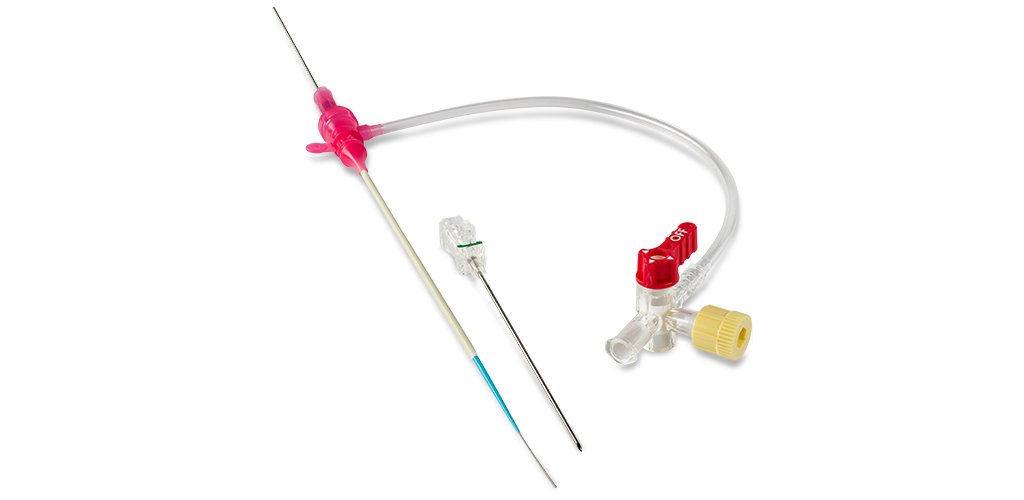
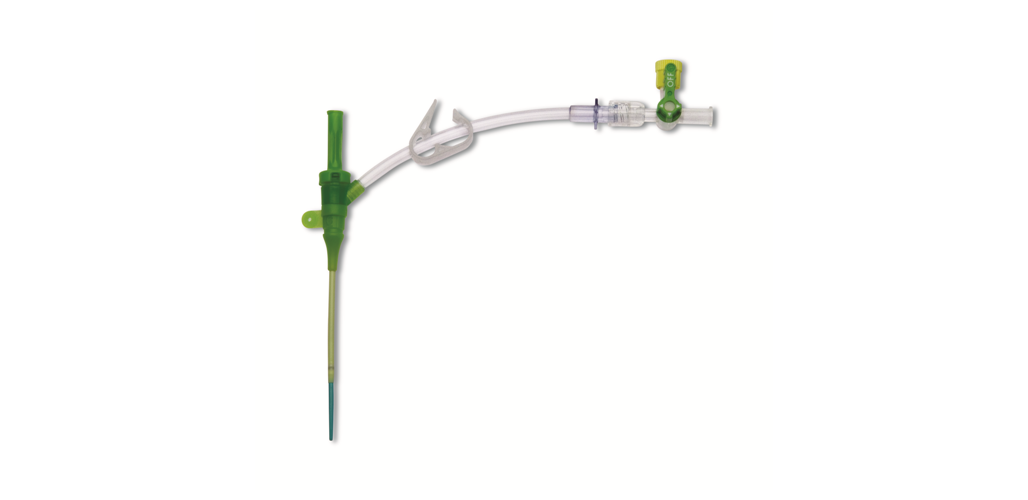
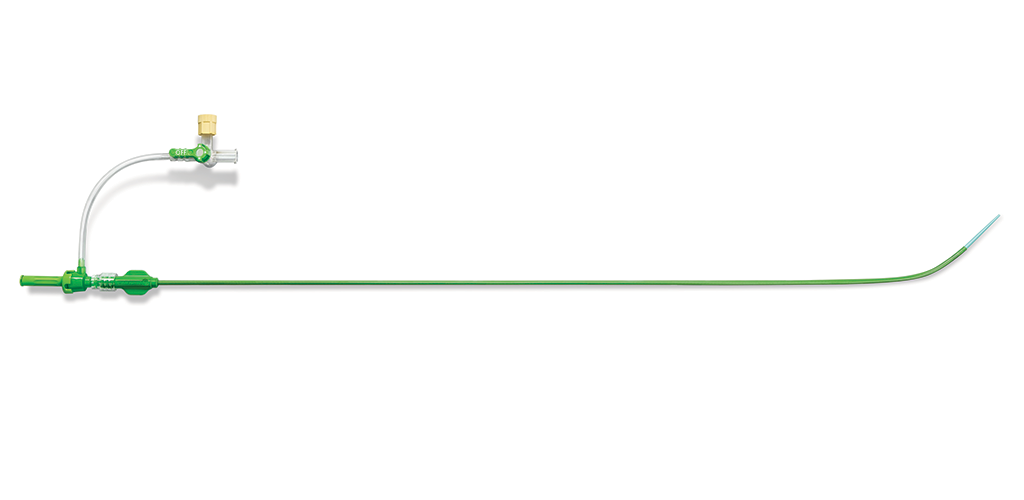
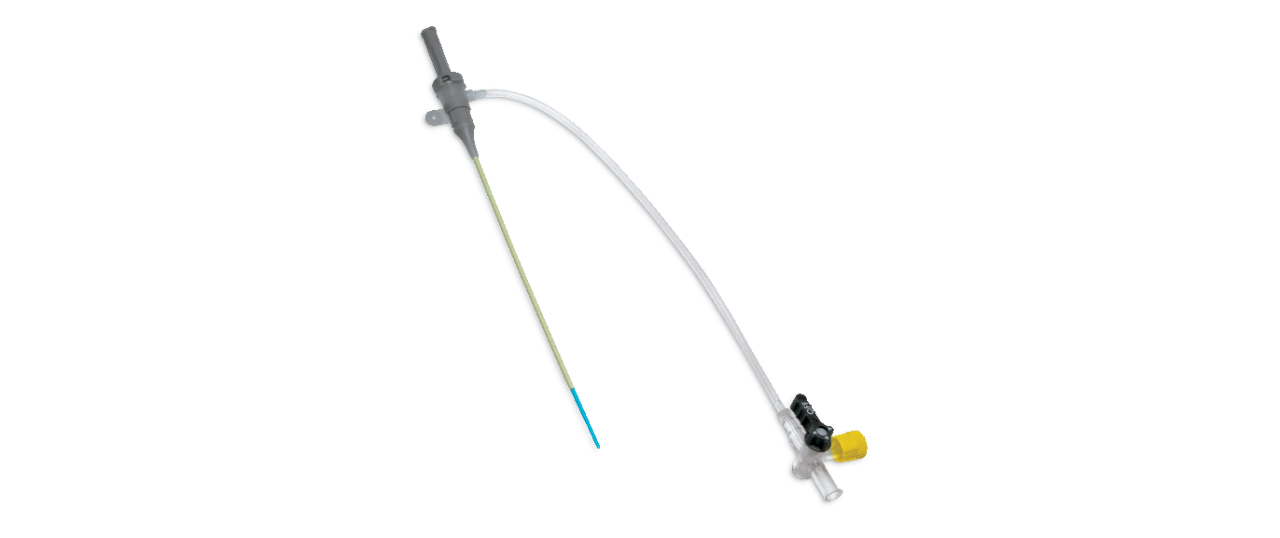
PINNACLE PRECISION ACCESS SYSTEM® Sheath
Help achieve smooth atraumatic vascular access through calcified or scarred arteries1
The unique design supports the lowest sheath penetration to minimize the size of the femoral access site.2
USE WITH CONFIDENCE
Designed for difficult insertion through calcified or scarred arteries
REDUCE COMPLICATIONS
Unique design supports the lowest sheath penetration to minimize the size of the femoral access site
EASY ACCESS
Precision Tip less likely to deform, resulting in easier, safer insertion
MICROPUNCTURE KIT ENGINEERED FOR SMOOTH, ATRAUMATIC VASCULAR ACCESS IN CHALLENGING ANATOMY
Competitive sheath requires 77% higher insertion force than Total Integrated Fit (TIF) technology2
- Tapered micropuncture needle enables transitions from 21G tip to 19G shaft for better blood return
- Back bevel cuts help to facilitate a straighter entry1
- Greater rail strength to prevent buckling with the only 0.021” wire on the market2
- Seamless guidewire-to-dilator and dilator-to-sheath transition for challenging access situations2
- Highly flexible design resists kinking and helps reduce complications2
PINNACLE PRECISION ACCESS SYSTEM Product SKUs
| Product Code | Sheath Size (Fr) | Wire | Needle |
| 70-4160 | 4 |
Nitinol | Echogenic |
| 70-4130 | 4 |
Stainless Steel | Echogenic |
| 70-5160 | 5 | Nitinol | Echogenic |
| 70-5130 | 5 | Stainless Steel | Echogenic |
| 70-6160 | 6 | Nitinol | Echogenic |
| 70-6130 | 6 | Stainless Steel | Echogenic |
| 70-7160 | 7 | Nitinol | Echogenic |
| 70-7130 | 7 | Stainless Steel | Echogenic |
| 70-8160 | 8 | Nitinol | Echogenic |
| 70-8130 | 8 | Stainless Steel | Echogenic |
| 70-4165 | 4 Stiff* | Nitinol | Echogenic |
| 70-4135 | 4 Stiff* | Stainless Steel | Echogenic |
| 70-5165 | 5 Stiff* | Nitinol | Echogenic |
| 70-5135 | 5 Stiff* | Stainless Steel | Echogenic |
DOCUMENTS

FREQUENTLY ASKED QUESTIONS
What is micropuncture in medical terms?
Micropuncture is a precise medical technique involving the creation of extremely small punctures, often using a micropipette or laser. It is commonly used in renal physiology to access nephron segments for studying kidney function, and in vascular or interventional procedures to safely gain access to small vessels. Its minimally invasive nature allows for accurate sampling or device placement with reduced tissue trauma.
REFERENCES
RX ONLY. Refer to the product labels and package insert for complete warnings, precautions, potential complications, and instructions for use
- Data on file. MAK Design Verification Report #20110024 5/23/11.
- Data on file. Pinnacle Precision Access System Competitor Evaluation Report #20170018.